
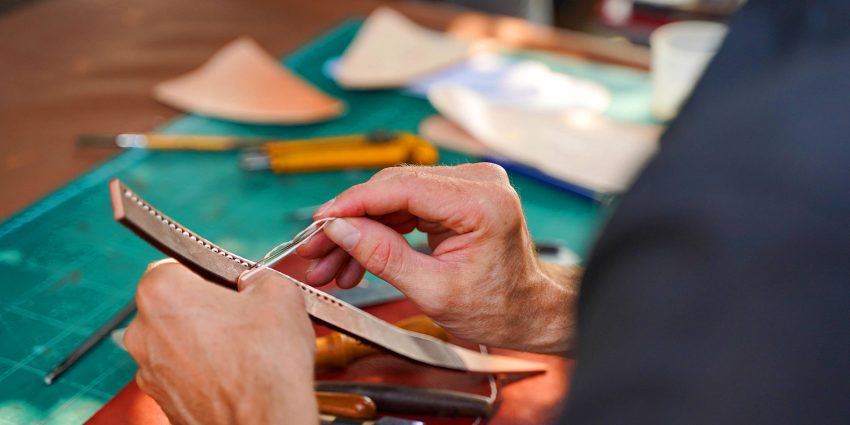
Ever tried pushing a regular sewing needle through a piece of thick leather and watched it snap in half? That frustrating moment is exactly why leather sewing needles exist as their own specialized category of tool. Whether you’re stitching a wallet, saddle, or a pair of boots, the needle you choose can make or break the entire project, quite literally.
Leatherwork isn’t forgiving. Unlike fabric, leather pushes back against thin, flexible needles, bending them or forcing them off course. Get the wrong needle and you’ll deal with skipped stitches, frayed thread, or a workpiece full of ragged holes. Get the right one, and stitching leather starts to feel almost effortless.
What Are Leather Sewing Needles?
Leather sewing needles are heavy-duty, rigid needles designed with reinforced shafts and specialized points (usually diamond-shaped or wedge-shaped) that pierce dense leather fibers without bending or breaking. Unlike standard sewing needles, they’re built to withstand the friction and resistance of hides, making them essential for hand-stitching wallets, belts, bags, and other leather goods.
Why Regular Needles Just Don’t Cut It
Standard sewing needles are made for woven fabric, not tough animal hide. Their sharp, round points glide through cotton or linen easily, but leather has a completely different fiber structure. It’s dense, fibrous, and often layered, meaning a round-point needle will either struggle to penetrate or create tiny tears that weaken the stitch line over time.
Leather needles solve this with:
- Diamond-shaped tips that slice cleanly through fibers instead of tearing them
- Thicker, stiffer shafts that resist bending under pressure
- Blunt or rounded points (in some variants) for pre-punched holes, avoiding thread damage
- Larger eyes to accommodate waxed thread or heavier cord
Types of Leather Sewing Needles You Should Know
Not every leather needle is built the same, and picking the correct one depends heavily on your project and technique.
1. Diamond Point Needles
These are the workhorses of hand-stitched leatherwork. The diamond tip cuts through the material as it passes, making them ideal for saddle stitching, the classic two-needle technique used in most traditional leather projects.
2. Harness Needles
Slightly blunter than diamond points, harness needles are designed to pass through pre-punched holes without splitting the thread or damaging the leather edges. They’re a favorite for durable items like belts, harnesses, and heavy straps.
3. Glover’s Needles
With a triangular, wedge-like point, glover’s needles are excellent for softer leathers and gloves, where a cleaner, smaller puncture is preferred over a wide diamond cut.
4. Curved Leather Needles
Curved needles are a lifesaver for tight spaces, upholstery work, or repairing items that are already assembled, like sewing a new panel onto a bag without taking it apart.
How to Choose the Right Needle for Your Project
Picking a needle isn’t just about grabbing whatever’s in the kit. A few factors matter more than people expect.
- Leather thickness: Thicker hides need sturdier, larger needles; thin leather works better with finer ones.
- Thread type: Waxed linen thread requires a bigger eye than standard polyester thread.
- Stitch type: Saddle stitching calls for diamond points, while machine-adjacent hand techniques often prefer blunter tips.
- Project size: Small items like cardholders need shorter, finer needles for control.
Many hobbyists start with a multi-pack containing a range of sizes, then narrow down their preferences as they get comfortable with different leather weights.
Common Mistakes Beginners Make With Leather Needles
Even experienced sewists sometimes trip up when they switch from fabric to leather. Here are a few pitfalls worth avoiding:
- Using a needle that’s too thin for thick leather, causing it to bend or snap mid-stitch
- Forcing the needle instead of letting the diamond tip do the cutting work
- Ignoring needle maintenance, since dull or bent tips create uneven stitches
- Mismatching needle and thread size, leading to loose or overly tight stitching
Avoiding these issues often comes down to having a properly stocked toolkit from the start. If you’re building out your setup, it helps to look into essential tools for leather making so your needles are paired with the right awls, thread, and cutting tools for consistent results.
Tips for Sewing Leather Like a Pro
A few small habits can dramatically improve your stitching quality:
- Always pre-punch holes with an awl or pricking iron before stitching thick leather
- Wax your thread if it isn’t pre-waxed, this reduces friction and prevents fraying
- Keep a needle-nose pliers nearby to pull the needle through dense sections
- Store needles separately from other tools to protect the tips from dulling
Small adjustments like these separate a rough, amateur-looking seam from a clean, professional finish.
Final Thoughts
Choosing the right leather sewing needles isn’t just a small technical detail, it’s one of the most important decisions in any leatherworking project. The correct needle type, paired with the right thread and technique, ensures durable, clean stitches that hold up for years. Whether you’re a hobbyist making your first wallet or a seasoned craftsman working on saddles and bags, investing in quality needles pays off in both the process and the final product.
Frequently Asked Questions
What is the best needle for hand-sewing leather?
Diamond point needles are generally considered the best for hand-sewing leather, especially for saddle stitching, because their shape allows them to cut cleanly through dense fibers without tearing.
Can I use regular sewing needles on leather?
Regular needles can work on very thin, soft leather, but they tend to bend or break on medium to heavy hides. A dedicated leather needle is safer and more reliable.
What size needle should I use for thick leather?
For thick leather, a larger, sturdier needle, often labeled as a heavy-duty or harness needle, is recommended to handle the added resistance without bending.
Do leather needles need to be sharp?
Yes, but the “sharpness” comes from the shape of the tip rather than a fine point. Diamond and wedge tips cut through leather fibers efficiently while remaining strong enough not to snap.
How often should I replace leather sewing needles?
Replace them as soon as you notice bending, dullness, or rough tips, since damaged needles can snag thread and create uneven, weak stitches.