
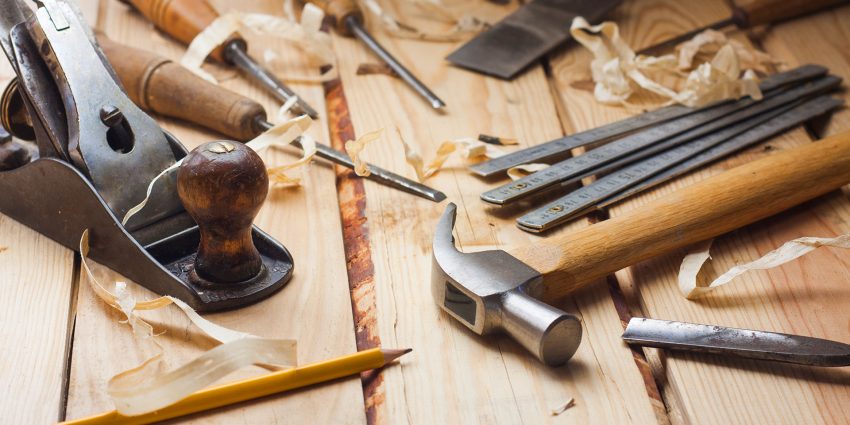
Walk into any woodshop and you’ll notice something interesting: the best carpenters aren’t the ones with the biggest tool collection. They’re the ones who know exactly which tool to grab for the job at hand. If you’ve ever stood in a hardware store aisle wondering what you actually need versus what’s just marketing hype, you’re not alone.
What Tools Do Carpenters Actually Need?
Carpenters need a core set of hand and power tools including a tape measure, hammer, chisels, hand saw, circular saw, level, and combination square. These tools cover measuring, cutting, shaping, and joining wood accurately. Beyond these basics, a drill/driver and clamps round out a functional, job-ready toolkit for most carpentry tasks.
Quick Insight: Quality matters more than quantity. A carpenter with five reliable tools will outperform someone juggling twenty cheap, unreliable ones every single time.
The Essential Carpenters Tools Breakdown
Carpentry, at its core, is about precision. Every project, whether it’s framing a wall or building a cabinet, depends on tools that measure, cut, and join wood with consistency.
Measuring and Marking Tools
Nothing gets built correctly without accurate measurements. This category is non-negotiable, even for absolute beginners.
- Tape measure: A 25-foot retractable tape is the industry standard for most jobs.
- Combination square: Checks 90-degree and 45-degree angles instantly.
- Chalk line: Marks long, straight lines across large surfaces.
- Marking gauge: Scribes consistent lines parallel to an edge, useful for joinery.
Cutting Tools
Cutting tools are where precision meets muscle. A dull blade or the wrong saw type can ruin an otherwise perfect measurement.
- Circular saw: Versatile for rip cuts and crosscuts on lumber and sheet goods.
- Hand saw: Ideal for detail work and situations where power tools are overkill.
- Chisels: Used for cleaning joints, mortises, and fine detail shaping.
- Utility knife: Handles everything from scoring lines to trimming materials.
Joining and Fastening Tools
Once pieces are cut, they need to come together securely. This is where a carpenter’s toolkit really earns its keep.
- Hammer: A 16-ounce curved-claw hammer suits most general carpentry.
- Drill/driver: Essential for pilot holes and driving screws quickly.
- Clamps: Hold pieces steady during gluing, cutting, or drilling.
- Nail set: Sinks nail heads below the wood surface for a clean finish.
Hand Tools vs. Power Tools: Finding the Right Balance
There’s an ongoing debate among carpenters about how much to rely on power tools versus hand tools. The truth is, both have their place, and leaning too heavily on either side limits your skill development and your project options.
Hand tools teach control, patience, and a feel for the material. Power tools save time and reduce physical strain on repetitive tasks. Most experienced carpenters use a hybrid approach, reaching for power tools on large-scale cuts and hand tools for fine detail work.
When Hand Tools Win
Hand tools shine in situations requiring finesse. Fitting a joint, trimming a stubborn edge, or working in tight spaces where a power cord or blade guard just won’t fit are all moments where a chisel or hand plane outperforms anything electric.
When Power Tools Win
For repetitive, high-volume tasks like framing a house or cutting dozens of identical boards, power tools are the clear winner. They save hours of labor and reduce fatigue-related mistakes.
Building Your Toolkit Without the Overwhelm
If you’re just starting out, it’s tempting to buy everything at once. Resist that urge. Building a toolkit gradually, based on the projects you’re actually working on, saves money and prevents clutter.
For those still figuring out where to begin, the guide on beginner woodshop tools lays out a practical, no-nonsense starter kit that avoids the common trap of overbuying unnecessary gear.
Here’s a smarter approach to building your collection over time:
- Start with measuring and marking tools; they’re inexpensive and used constantly.
- Add one quality hand saw and a set of chisels before investing in power tools.
- Purchase a drill/driver combo, often the most-used power tool in any shop.
- Expand into specialty tools only when a specific project demands it.
Maintaining Your Tools for Longevity
Even the best carpenters tools lose their value fast if they’re neglected. Rust, dull blades, and misaligned squares can throw off entire projects.
- Clean tools after every use to prevent sawdust buildup and rust.
- Sharpen blades and chisels regularly to maintain clean, accurate cuts.
- Store tools in a dry environment to avoid moisture damage.
- Check calibration on squares and levels periodically to ensure accuracy.
Pro Tip: A five-minute cleanup routine at the end of each project extends tool lifespan significantly and keeps your workspace safer.
Frequently Asked Questions
What is the most important tool for a carpenter?
The tape measure is arguably the most important tool since accurate measurements form the foundation of every successful carpentry project.
Can I start carpentry with just hand tools?
Yes, many skilled carpenters started with only hand tools. It builds fundamental skills, though power tools speed up larger projects considerably.
How many tools does a beginner really need?
A beginner needs roughly eight to ten core tools, including a tape measure, hammer, chisels, saw, square, and drill/driver, to handle most basic projects.
Do carpenters use the same tools as woodworkers?
There’s significant overlap, but carpenters often work with construction-grade tools for framing and structural work, while woodworkers focus more on fine detail and finishing tools.
What’s the difference between a chisel and a plane?
A chisel removes small amounts of material for shaping and joinery, while a plane smooths and flattens larger surfaces evenly across a board.
Final Thoughts
Building a reliable carpentry toolkit doesn’t happen overnight, and it shouldn’t. Focus on mastering the essentials, measuring tools, saws, chisels, and a solid hammer, before expanding into specialty equipment. Quality over quantity will always serve you better in the long run, both in your results and your budget. Start simple, practice consistently, and let your toolkit grow alongside your skills.