
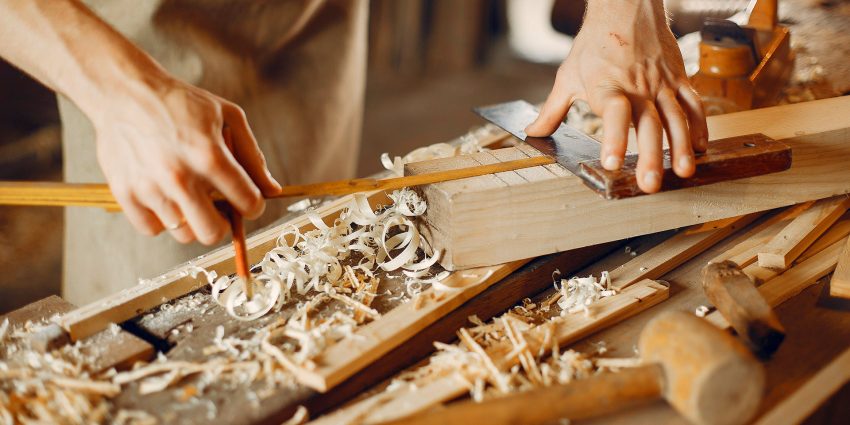
So you’ve caught the woodworking bug. Maybe you watched one too many YouTube videos of someone effortlessly crafting a walnut coffee table, and now your garage is calling your name. But before you start dreaming about dovetail joints and live edge slabs, you need the right gear, and honestly, the rabbit hole of tool shopping can feel overwhelming fast. The good news? You don’t need a $20,000 workshop to start building beautiful things. A handful of well-chosen beginner woodshop tools can take you from zero to genuinely capable craftsman in a single weekend.
What tools does a beginner woodworker need?
A beginner woodworker needs a circular saw, cordless drill, random orbital sander, tape measure, combination square, chisels, a mallet, clamps, and safety gear (glasses, hearing protection, dust mask). This core kit handles measuring, cutting, joining, and finishing for nearly every starter project.
The Non-Negotiable Power Tools
Power tools are where most beginners get sticker shock, but you can build a surprisingly capable arsenal without draining your savings. Focus on versatility over specialization in the early days.
Circular Saw
If you only buy one power tool, make it this one. A circular saw can rip plywood, crosscut lumber, and even substitute for a table saw if you pair it with a straight edge guide. Look for something in the 7-1/4 inch range with a decent motor.
Cordless Drill / Driver Combo
A drill drives screws, bores holes, and occasionally moonlights as a stirring tool for stain. An 18V or 20V model with two batteries means you’re never waiting around for a charge mid-project. Get one with variable speed and a clutch.
Random Orbital Sander
Hand sanding has its place, but spending three hours rubbing a board with sandpaper is not how anyone wants to spend a Saturday. A 5-inch random orbital sander gives you a swirl-free finish and saves your forearms.
Hand Tools That Actually Earn Their Keep
Power tools get the glory, but hand tools do the precision work. These items are cheap, last forever, and dramatically improve your final results.
- Tape Measure: A 25-foot model with a wide blade. Don’t cheap out, the lock mechanism matters.
- Combination Square: For marking 90 and 45 degree angles accurately.
- Chisel Set: Start with 1/4, 1/2, and 3/4 inch sizes. Keep them sharp.
- Wooden Mallet: For driving chisels without mushrooming the handles.
- Block Plane: Smooths rough edges and trims tight joints.
- Marking Knife: Far more accurate than a pencil for joinery layout.
Clamps: You Can Never Have Enough
Ask any woodworker what they wish they had more of, and the answer is always clamps. Glue-ups demand pressure, and pressure demands clamps. Start with four bar clamps and four quick-grip clamps. You’ll add more, trust me.
Budget Pick
Pipe clamps are dirt cheap. Buy the heads and use any threaded pipe from the hardware store as the bar.
Premium Pick
Parallel jaw clamps apply even pressure across wide panels. Pricey but worth it for cabinet work.
Safety Gear Is Not Optional
I know, I know, it’s not exciting. But fingers are useful and lungs are important. Buy these on day one:
- Safety glasses (the wraparound kind, not the dorky lab ones)
- Hearing protection (earmuffs or quality earplugs)
- N95 or P100 dust masks
- A push stick for any saw work
Tools You Can Skip for Now
Marketing convinces beginners they need everything. They don’t. Here’s what you can put off:
- Table saw: Useful eventually, but a circular saw with a guide handles 90% of cuts.
- Jointer and planer: Buy pre-milled lumber until you’re committed.
- Router with a full bit set: Get one router and one bit when a project demands it.
- Pneumatic nailers: Cool toys, but a hammer works fine for now.
Quality vs Budget: Where to Spend
Here’s the real talk. Spend money on cutting tools, measuring tools, and anything that touches your hands during long sessions. Cheap chisels chip, cheap squares lie, cheap drills die. Save money on tools you use occasionally or where the difference is mostly cosmetic.
Professional craftsmen often debate how tools hold up over decades of hard use. The way precision tools perform in industrial environments offers a useful lens for hobbyists too, because tools built to survive professional abuse will easily outlast your weekend projects, often by generations.
Setting Up Your Space
Your tools need somewhere to live and work. A sturdy workbench is the heart of any shop, even if it’s just a slab of plywood on sawhorses to start. Add good lighting (you cannot have too much), a shop vacuum for dust control, and some kind of organization system before tools start migrating into mysterious piles.
Frequently Asked Questions
How much should a beginner spend on woodworking tools?
A solid starter kit runs between $400 and $800 if you buy mid-tier brands. You can drop to around $250 by hunting estate sales and refurbished tools, or go up to $1,500 for premium gear. There’s no need to spend more in the beginning.
Should I buy corded or cordless power tools?
For beginners, cordless wins for convenience. Modern lithium-ion batteries deliver plenty of power for hobby work. Stick with one battery platform across your tools so you can swap packs between your drill, driver, and circular saw.
What’s the single most useful tool for a beginner?
A circular saw paired with a straight edge guide. This combo can substitute for a table saw, miter saw, and panel saw on smaller projects, which means you can build real furniture before investing in those bigger machines.
Do I need a table saw to start woodworking?
No. A circular saw, a track or straight edge, and patience will replicate most table saw cuts. Add a table saw when you find yourself making repetitive rips and crosscuts often enough that the time savings justify the cost and space.
How do I keep my hand tools sharp?
Get a basic sharpening setup with diamond plates or water stones. A dull chisel is dangerous and frustrating. Touch up edges every few hours of use, and do a full sharpening when nicks appear or the tool stops cutting cleanly.
Final Thoughts
The best beginner woodshop tools aren’t the fanciest or the most expensive, they’re the ones you’ll actually use. Start with the essentials, build something, then let your projects tell you what to buy next. Every experienced woodworker has a shop full of tools they wish they’d waited to purchase and a few cheap ones they replaced three times before buying quality.
Pick up the core kit, prioritize safety gear, and get sawdust on your shoes. The craft rewards patience and practice far more than it rewards a fat tool budget. Now go build something.