
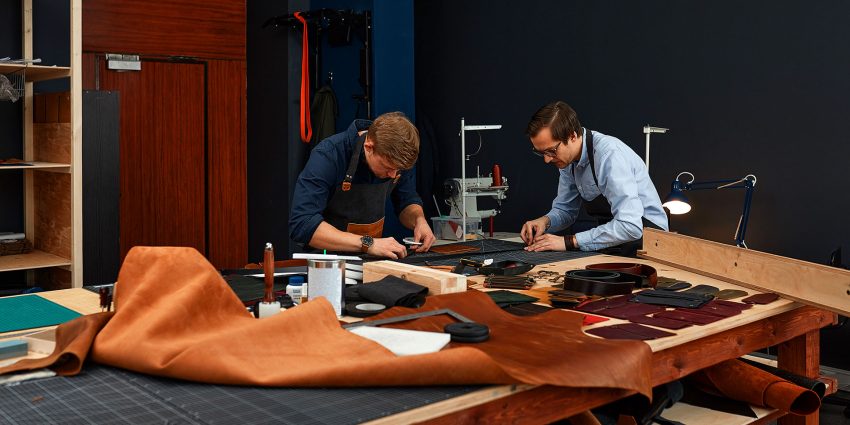
Leather has a way of humbling beginners. You buy a beautiful side of veg-tan, sit down at your bench, and suddenly realize that without the right gear, even slicing a clean strap feels impossible. The truth? Great leatherwork is less about talent and more about owning the proper tools for leather making and knowing how to use them.
What tools do you need for leather making?
The essential tools for leather making include a sharp knife (head or rotary), cutting mat, steel ruler, stitching chisels or pricking irons, waxed thread with harness needles, edge bevelers, burnishers, mallets, and hole punches. Together, these handle cutting, stitching, edging, and finishing for almost every project.
The Core Cutting Tools Every Leatherworker Needs
Cutting is where every project begins, and a clean cut sets the tone for everything that follows. Dull blades tear fibers, leaving fuzzy edges that no amount of burnishing can rescue.
Head Knife (or Round Knife)
The head knife is the workhorse of traditional saddlers. With its half-moon blade, you can skive, slice, and curve through thick hides with a single fluid motion. It takes practice, but once mastered, it replaces three or four other tools.
Rotary Cutter and Utility Knife
If a head knife feels intimidating, a rotary cutter delivers fast, precise straight cuts on thinner leathers. Pair it with a self-healing mat and a steel ruler, and you have a setup that suits beginners and pros alike.
Strap Cutter
For belts, watch straps, or anything that needs a perfectly uniform width, an adjustable strap cutter saves hours. Set the width, glide it along the edge, and let the blade do the work.
Stitching Tools: Where Craftsmanship Shines
Hand-stitched leather is instantly recognizable. The slanted, evenly spaced saddle stitch is what separates handmade goods from factory output, and it all starts with the right punches and needles.
- Pricking irons mark your stitch line with consistent spacing and angle.
- Diamond stitching chisels punch fully through the leather for easier needle passes.
- Harness needles (blunt-tipped) protect your thread and your fingers.
- Waxed polyester or linen thread grips itself for tight, lasting seams.
- Stitching pony holds your work steady so both hands stay free.
If you plan to stitch heavier projects like holsters, sheaths, or saddles, invest in irons with deeper teeth and a sturdy poly board to protect your bench and chisel tips.
Edge Finishing Tools That Elevate Your Work
An unfinished edge instantly signals an amateur project. Edge work is what makes a wallet feel premium or a belt feel heirloom-worthy.
Edge Bevelers
These tiny gouges shave the sharp corners off cut edges, creating a rounded profile that looks refined and resists wear. They come in numbered sizes, with #2 and #3 covering most general work.
Burnishers
A wooden or canvas burnisher polishes beveled edges to a glossy shine. Add a touch of beeswax, gum tragacanth, or saddle soap, then rub vigorously until the fibers compress and seal.
Creasers and Edge Paint
Creasers press a decorative line near the edge for a tailored look. For bag makers and high-end goods, edge paint sealed with a heated creaser is the modern alternative to burnishing.
Punching, Setting, and Hardware Tools
From snap buttons to belt holes, leatherwork is full of moments where precision punching makes or breaks the final result. The same goes for working with tougher textiles, where the right industrial fabric punch can mean the difference between a clean hole and a frustrating mess.
Hole Punches
Rotary punches handle light belts and straps, while drive punches and round mauls give you cleaner cuts in thicker leather.
Setters and Anvils
Snap setters, rivet setters, and a solid steel anvil are essential for installing hardware without damaging the finish.
Mallets and Mauls
Use poly, rawhide, or nylon heads. Never use a metal hammer, it will destroy your tool edges and your bench.
Marking, Measuring, and Layout Tools
Accurate measurement is non-negotiable. A misplaced line wastes leather, and leather is expensive.
- Steel ruler with cork backing to prevent slipping
- Wing dividers for marking parallel stitch lines
- Scratch awl for transferring patterns
- French curves for elegant rounded corners
- Pattern paper or tagboard for reusable templates
Specialty Tools Worth Adding Later
Once you have the basics dialed in, these additions open up new techniques and faster workflows.
Skiving Knives
Thinning leather at seams or folds creates cleaner joins. A safety skiver or French-style skiving knife both work well, depending on your comfort level.
Swivel Knives and Stamps
For tooling and carving veg-tan leather, a swivel knife cuts decorative lines while stamps add texture and depth. This is where leatherwork crosses into pure art.
Sewing Machines
A heavy-duty cylinder arm or post-bed machine becomes essential if you move from hobby to small business. They handle multiple layers that no domestic machine can touch.
Setting Up Your First Leather Workbench
Tools alone are not enough. A sturdy, well-lit bench changes how your projects come together. Aim for a solid surface around hip height, plus a poundo board or granite slab for absorbing impact when punching and stamping.
Keep blades sharp, store hardware in labeled bins, and clean your bench between projects. Small habits protect both your tools and your fingers.
Frequently Asked Questions
What is the most important tool for a beginner leatherworker?
A sharp, reliable cutting knife. Whether you choose a rotary cutter or a head knife, clean cuts are the foundation of every successful project.
Are expensive leather tools really worth it?
For pricking irons, edge bevelers, and knives, quality matters. Cheap versions dull quickly and ruin your leather. Mid-range tools usually offer the best value for hobbyists.
Can I start leatherwork with just a basic kit?
Yes. A beginner kit with a knife, chisels, needles, thread, mallet, and edge tools is enough to make wallets, card holders, and simple belts.
How do I maintain my leather tools?
Wipe blades clean after use, hone them regularly on a strop, and store everything in a dry environment. Rust and dullness are the two biggest threats to longevity.
What is the difference between pricking irons and stitching chisels?
Pricking irons mark the leather and usually require an awl to finish the hole. Stitching chisels punch all the way through, making them faster and more beginner-friendly.
Final Thoughts
Building a leather workshop is a journey, not a single shopping trip. Start with quality basics, learn each tool intimately, and add specialty pieces as your projects demand them. The right tools for leather making turn frustrating guesswork into rewarding craftsmanship.
Focus on sharp cutting, clean stitching, and polished edges. Master those three pillars, and the leather will do the rest. Every great maker started with a simple bench, a few well-chosen tools, and the patience to let skill catch up to ambition.